|
|
In a popular book that details the scientific quest for the secrets
of the Universe, Dennis Overbye, science writer for the New York
Times, makes it clear that the search has failed. Overbye readily
admits, “in a way this book is about failure.” One reads in the book
“about what it’s like to be on the cosmological quest ... [with] the
priests and the mythmakers of our technological age”[Overbye,
p3] and, upon
finishing the last chapter, one is disappointed to find that the
secret of the Universe is missing.
Standard cosmology has failed, utterly and completely, in revealing
the true reality of the Universe —the reality of its fundamental
structure and fundamental processes.
Along the journey of mankind’s quest for the secrets of
the Universe the participants stumbled, misread the clues, and headed
down the wrong road. Long ago in the year 1887, cosmologists found
themselves at a fork in the road. In that historic year,
pioneering scientists misinterpreted a critically important physics
experiment. A smaller-than-expected speed for the Earth’s motion
through aether-space was duly found and recorded; but rather than
suspect some flaw in the instrument’s calibration, the final
conclusion of this famous experiment was that the aether motion had
not been detected. This conclusion, which became known as the
Michelson-Morley “null result,” sent fundamental physics and
mainstream cosmology down a tortuous path.
That error —invalid conclusion, wrong road— occurred in the 19th
century. Then, in the following century, that same wrong road
eventually led a major branch of science into the Big Bang blunder and
the fabrication of an associated creation myth. This strange
combination passes for standard cosmology, whose defining
feature is whole-universe expansion. Today in the
21st century the space sciences are still traveling along
this same path in the same wrong direction.
Standard cosmology is in the midst of a crisis. What follows should
leave no doubt.
One of the world’s most famous astronomers (and
unquestionably the world’s expert on peculiar galaxies), Halton Arp,
has collected the evidence over many years and —personally as well
as professionally— maintains that extragalactic redshifts are
not caused by an expanding universe. In taking such a
contrarian stand, this distinguished Professor is denying the very
foundation of all big bang models! If the universe does not
expand then obviously it does not constitute any sort of big
explosion. No big bang! [Arp 1998]
Halton Arp recognizes the crisis in his field, knows it is on the
wrong path, and struggles, in his words, “to get the mainstream of
astronomy back on track.”
|
|
I believe the observational
evidence has become overwhelming, and the Big Bang has in reality
been toppled. There is now a need to communicate the new
observations, the connections between objects and the new insights
into the workings of the universe ---all the primary obligations
of academic science, which has generally tried to suppress or
ignore such dissident information.
–Halton Arp [Arp 1998, Preface] |
|
One famous physicist/cosmologist, Hannes Alfvén
(1908-1995) —a
Nobel Laureate (plasma physics 1970) no less— came to recognize and
boldly reject the implausible. He was not about to waste time on a
road going nowhere. And neither was he going to waste words. To him it
was patently evident that the big bang never happened !
|
|
There is no rational reason to
doubt that the universe has existed indefinitely, for an infinite
time. It is only myth that attempts to say how the universe came
into being either four thousand years ago or twenty billion years
ago. –Hannes Alfvén [as in Lerner 1988] |
|
What did happen is that those early pioneers, confronted
with convincing evidence that cosmic space expands and presented with
sound theory that space (the vacuum) must expand, wisely concluded that space
indeed expands. But then some of those pioneers got carried away; they
decided that the entire Universe must be expanding!
The astronomers had their redshift measurements of apparently
receding galaxies and the relativist theorists had their mathematical
magic ... and the rest is history. The Big Bang was adopted as a result
of an overzealous utilization of history’s grandest unscientific
extrapolation.
Problem was, and still is, that the extrapolation won’t work. There
are serious problems with space-expansion extrapolation (think
cosmic-edge paradox) as well as with temporal extrapolation (think
beginning-of-universe paradox).
|
|
The problem with Big Bang
theorists, Alfvén argues, is that they try to extrapolate the
origin of the universe from mathematical theories rather than from
laboratory phenomena ...
–Eric J. Lerner [Lerner 1988] |
|
Now for some of the details of the treacherous road of obstacles
and pitfalls that impede the advancement of space science in general
and cosmology in particular. The obstacles are the mysteries and
unanswered questions that have led to a state of crisis. For the most
part they are the direct consequences of the invalid Big Bang cosmology.
Most are simply unresolvable within a universal-expansion paradigm. The
following compilation is not in any particular order, except that it
begins with the Big Bang’s primordial speck-of-almost-nothing and
culminates with the devastating Crisis of 1998.
The Big Bang universe is said to have originated as an
infinitely small primordial atom of infinite matter
density. But, according to cosmologist Edward R. Harrison
[Harrison 1981,
p229], “What happens at infinite density is not known, and for
physical reasons it is probable that a singular state of this nature
is unattainable.” Yet this
atom is said to transform itself into the Big Bang universe.
Now is there anyone who would deny that a speck of almost nothing
that contains almost everything is an outrageous paradox? The mystery of
the primordial atom is so unfathomable, so paradoxical, that it can
hardly qualify as science! The primordial atom is but a fantasy —an
outright contradiction.
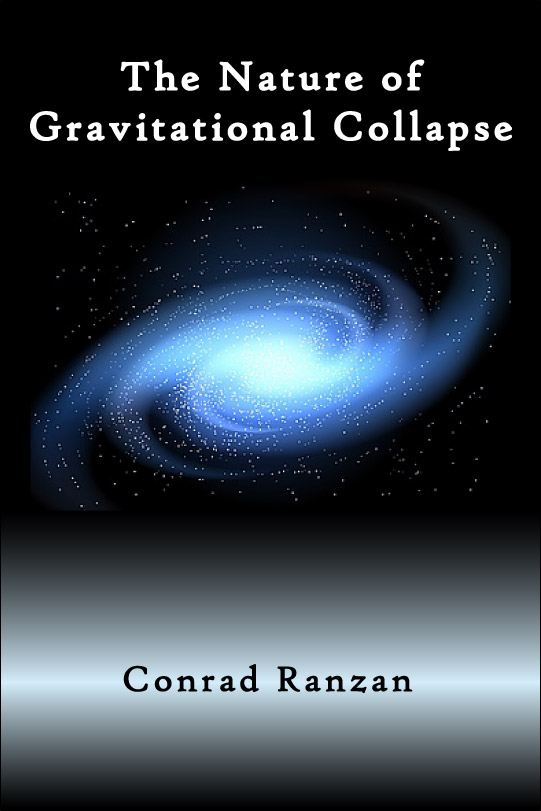
This should more properly be called the mystery of the mechanism of
gravitational collapse. The black-hole concept simply represents
but one interpretation of gravitational collapse, one consequence of
excessive matter concentration.
In 1939 Einstein published a paper in which he showed
that matter could not be so condensed that the Schwarzschild radius
would fall outside the physical boundaries of the gravitating body and
thus become a reality. Einstein had essentially proved that
gravitational collapse does not result in a singular state; collapse
does not result in a black hole. (Unfortunately, Einstein’s finding was
not properly appreciated and never incorporated into the dominate
view. Peter Bergmann, one of Einstein’s students, in a book The
Riddle of Gravitation he authored many years later, played down
the significance of the 1939 paper by stating that Einstein “attempted
to show” that matter could not be so concentrated as to form a black
hole [Bergmann 1992, p131]. Bergmann, who had obviously become a fan of black holes,
implied, with his choice of the phrase “attempted to show,” that
Einstein’s proof had somehow failed.) Unfortunately, Einstein’s sound
reasoning on black holes was never adopted.
The equally eminent J. Robert Oppenheimer, along with two
collaborators, argued that when sufficient mass becomes concentrated
it will collapse into its Schwarzschild radius, and it will do so
because matter losses its stability to resist its own self gravitation
[Bergmann 1992, p131]. The Oppenheimer team
essentially proved that gravitational collapse does occur. If
the concentration of mass-and-energy is great enough, nothing
whatsoever can prevent the collapse. Here again, there is sound
reasoning backing the argument. The relevant question then is: But
what is the nature of this collapse?
The gravitational-collapse mystery has the most amazing
resolution. It turns out that under the New Cosmology resolution
Einstein and Oppenheimer were both right! The resolution that eludes
mainstream thinking is that gravitational collapse does not imply the
formation of black holes.
Halton Arp, over the years, has “collected enough so-called
anomalous redshifts to have overthrown conventional big bang
cosmology.” [Overbye, p390]
Astronomers have found many galaxy pairs and galaxy groups in which
the members are evidently close to each other —even interacting—
yet have redshifts that are radically at odds! Their redshifts don’t
make sense: If two galaxies are roughly in the same place then their
measured redshifts should agree with each other, since redshift is
supposed to be a measure of their distance (although the redshift may include a
relatively minor Doppler component due to local motion). The observational
fact that the redshifts don’t agree is considered anomalous. The mystery is in the
cause, and also why some of the anomalies are so extreme.
The cosmic edge riddle is probably the oldest riddle in
cosmology. In simple terms: Any finite universe has a cosmic edge. How
does one deal with that edge? In its ancient form the question was
graphically posed by the Pythagorean soldier-philosopher Archytas of
the 5th century B.C.; what happens to a spear when it is
hurled across the outer boundary of such a universe?
[Harrison 1981, p104]
What about an expanding universe? If it is finite and
Euclidean with three spatial dimensions, we would ask:
If the
universe is expanding, what in the world (or whatever) is it expanding
into? Furthermore, if it is expanding into a nothingness-void (or
whatever), why isn’t that considered part of our universe?
The Expanding-type universe based on general relativity
is able to solve the cosmic edge riddle by mathematically
zippering the boundary "edges" together resulting in a seamless
cosmos. Don't try to visualize this. It only works
mathematically.
The curvature of space is a mathematical concept; a
mathematical contortion of spacetime coordinates; a mathematical
formula. Curvature is a
concept that wonderfully describes what gravity does to things like
stars, objects, and light beams. Unfortunately no one seems to know
what this curvature actually is. Yes, of course, we all know
that mass curves space; but what in the name of reality does that
mean?
What is it that matter does to surrounding space? ...
Does it flash
geometric equations? ... Signal with tensor matrices?
And so, another mystery —a mystery that extends into
the spatial curvature of the entire Big Bang universe. Hence, we find in
research papers, and popular articles, numerous references to the
space curvature problem. For many years the question used
to be, "Is the curvature of the universe positive (closed), negative
(open), or neither (flat)?" Sounds like a simple enough question to solve —given
our modern observational sophistication. Anyway, a solution was found,
but amazingly the mystery has deepened. The two part question now
being asked is: Why is the universe negatively curved?! —and
yet at the same time appear so flat?! What is it to be,
hyperbolic curvature or zero curvature?
It is best to reserve judgment until better
data is obtained.
–Professor Edward Wright (1998) on the determination of spatial
curvature
While we wait for a resolution, let
us continue along the Big Bang, Expanding universe, mystery tour.
Mainstream cosmology tries to avoid this
puzzling pitfall. The topic is
rather embarrassing. The truth of the matter is that both the open
and the flat big-bang universes (these are the versions that have
the universe expanding forever) are based on a paradox —actually a
double paradox. And what is so embarrassing is that it is the worst
kind of paradox one could have in any theory —thermodynamic law
violation.
It is useful to understand the basic fact that heat energy is
disordered energy and is therefore the highest entropy
form of energy. And we all know that at the primordial big-bang-moment
things were hot —really, really hot! In theory, the temperature was at
its maximum. Naturally we should be able to assert that entropy was
also highest at that moment at the supposed birth of the universe. Now if
entropy is maximum in the early big bang, then how can entropy
increase as it is supposed to during the subsequent evolution of the
universe? Entropy is already at maximum! How can it increase further?
And yet thermodynamic law says it must increase! ... A paradox.
|
|
Recall that the primordial fireball
was a thermal
state—a hot gas in expanding thermal equilibrium. Recall, also,
that the term ‘thermal equilibrium’ refers to a state of
maximum
entropy. However, the second law demands that in its initial
state, the entropy of the [Big Bang] universe was at some sort of
minimum,
not a maximum!
What has gone wrong?
–Roger Penrose [Penrose 1990, p328] |
|
What is more, the open/flat universe (this includes the currently
popular accelerating version), by definition, expands forever. As it
expands, its regional average temperature becomes colder and colder. In
time, stars die, galaxies collapse, black holes evaporate. Left-over
radiation is relentlessly redshifted (a consequence of universal space
expansion). The temperature —the measure of the weakening radiation—
drops. The temperature in all regions of the universe approaches the
ultimate low of absolute zero. And in tandem, entropy approaches its
ultimate low value. By definition a system at absolute zero has zero
entropy. So the universe ends up having an ultimately low entropy when
it is supposed to end up (according to proven physical law) in a
maximum state of disorder (i.e., high entropy).
And we are left wondering: How can it be that entropy decreases in this
supposedly natural and closed system —the BB-expanding-universe
system? The second law is clear, entropy must only increase or remain
constant! Again, a paradox.
For an overview of the homogeneity
riddle let me simply quote from Edward Harrison’s cosmology textbook
[Harrison, p314]:
|
|
Widely separated regions, billions
of light years apart, are in similar states and are dynamically
synchronized. We would feel more comfortable with this amazing
state of homogeneity if we could explain why it exists. |
|
It is also known as the uniformity paradox.
“A major paradox in cosmology is the near uniformity of the
universe.” That's how it was explained in Scientific American Jan 1999
[Bucher & Spergel 1999, p69]. As happens with bad theories, there is a deeper
confounding level to any mystery. Such is the case here. Because the
Big Bang is an evolving cosmos, there is an additional perplexing aspect to
the uniformity paradox: Why does the distant past
look practically the same as the near-and-present?! Looking 10 billion
years, even 13 billion years, into the past looks very much the same as the present.
That’s
not the way it is supposed to appear in an expanding universe!
Metaphorically speaking, the challenge here is to explain how
something, say a building, can look almost the same before and after
it is ballistically blown apart.
The situation is this: Not only is the universe everywhere
uniform now; but it also appears to be uniform in time.
Past and present, then and now, are evidently uniform with each other.
In other words, the supposedly evolving Big Bang universe seems strangely
not to be evolving! ... Any objections to calling this the
cosmic-evolution paradox?
And yet, the resolution is so utterly obvious.
Originally the Flatness problem was described as the “riddle of why
the universe is neither dramatically open nor closed, but appears to
be almost perfectly balanced between these states.” [Ferris
1988, p398]
After the cosmology crisis of 1998 the problem became: Why is the balance
tipped in favor of an open universe doomed to expand
forever?
Notice how the course of Expansion cosmology is often a matter of
replacing one problem with another.
In addition to the Fatness problem there is also an Oldness
problem. Both are rooted in the criticality of the universe’s total
matter density. For the Flatness problem, if the matter density ratio
deviates from some critical value, the universe will either collapse
(making it a closed universe) or expand (making it an open universe).
Now for the Oldness problem, this same density ratio has an affect
on the BB universe’s life span. If the density is slightly above
criticality (by as little as 1 part in 1024 during the
first nanosecond of the primordial
genesis) the universe would already have ended. While a lower density
leads to a universe without end. The question is, why should we be so
close to that magic critical density? Hence, the Oldness riddle. The combined flatness-oldness riddle is a two sided coin.
[Wright 2003]
It seems that certain objects in the Universe have been found to
be older than what the Big Bang (BB) universe is believed to be. A somewhat embarrassing
situation. Among the most ancient observable stars are those found in
globular star clusters some of which are located near the Milky Way
galaxy. Estimates of their age, based on calculations of how fast
stars burn their nuclear fuel, have ranged from 10 to 20 billion years
(depending on the values of the various parameters used)
[Krauss, p56]. Such objects appear to be older than the universe
is supposed to be.
Science News, March 30, 2002, reported the discovery of the most
distant galaxy to date. The redshift measured 6.56, the highest ever
recorded. According to BB cosmology the object lies more than 13
billion lightyears from Earth, and by implication existed a mere 780
million years after the initial big bang. Another team of astronomers
was reported to have imaged a primordial grouping of galaxies —making
it the most distant known cluster. Think about what this means.
For BB believers it means fully formed galaxies and complete galaxy clusters all less than one
billion years old! But, of course, galaxies simply cannot form in such a short
time. Hence, an Age paradox.
Normally, a paradox is justification for model abandonment. However,
the BB model pulled a rabbit from its hat —something called
inflation. It solves the Age problem but does so at the expense of
introducing an even greater mystery. (See Inflation Mystery,
below.)
The Horizon mystery can be described in somewhat simplified
terms in the following way. Consider the early Big Bang universe at 300,000
years after its spontaneous genesis. The temperature of the sky
in opposite directions would have been about 3000 kelvin (per BB theory). These
opposite regions were not in contact and could not have influenced each other.
Yet amazingly, 10 or 15 billion years later (in the present era)
the measured temperature in the opposite extremes of the sky are equal
to each other by better than 1 part in 10,000. Remarkably, the Cosmic
Background Radiation (having 2.7 K temperature) observable in any
direction of our cosmic horizon does not deviate by more than 1 part
in 10,000. How is such coordination possible? This is known as the
Horizon riddle in BB cosmology.
[Wright 2003]
(also known as the inhomogeneity
mystery)
The following statement was true when it was
written in the 1980s. For Big Bang believers, it is still true today.
|
|
How the original unstructured
universe evolved into its present highly structured state is a
major unsolved riddle in cosmology.
–E.R. Harrison [Harrison 1981,
p218] |
|
The structure being referred to here is not of galaxies
themselves but the structure of the grouping of galaxies —the way they
cluster, the way they arrange into superclusters.
|
|
Rich superclusters and voids form a
quasi-regular lattice; ... However, there are several problems not
solved yet. [Such as] How large is the region of the regular superclusters-void network? ... Finally, the theoretical
questions: Why is there a preferred scale and why does it have a
[specific] value?
... no experimental result can be taken seriously if not
explained theoretically.
Also further theoretical analysis is needed to find the physical
origin of the scale and the extent of the regularity.
–Jaan Einasto [Einasto 2003] |
|
Let me make this clear: Astronomer Einasto, in his 2003 Paper, is
telling us that we should not take seriously the observed cellular
structure of the Universe because none of the Big Bang theories predict or
support such findings!!
Professor Einasto seems unaware, or just
unconcerned, that the Big Bang failed in 1998, that it is time to abandon
the its road-to-nowhere, that it is time for a reality check. An
entirely new roadmap is available. But who will risk a change of
direction? Certainly not the theorists trained and indoctrinated under
the Expansion-universe paradigm. While extremely reluctant to accept
new ideas, they are completely immune to revolutionary proposals. The
veracity and extraordinary explanatory power of a new theory is of no
concern, but is simply dismissed as an intriguing curiosity. Sadly,
such is the effectiveness of the mind conditioning, the Pavlovian
compliance to the official worldview.
Evidently the steering wheel of the BB wagon is stuck, as we
witness the its Designers searching for intelligibility, unfortunately
in the same old wrong direction. The situation is so desperate that
they are willing to try almost anything. For instance, some
cosmologists have decided that understanding is now to be sought in,
of all things, “randomness”! That’s right, chaotic processes! BB
cosmology is now, and has been for some time, focusing on the disorder of structure, or
randomness: “The naïve notion that at some scale the cosmos
becomes uniform has been replaced by an appreciation that the
large-scale structure of the universe must be understood in terms of
random processes.” [Landy 1999, p38] Although this quote, which was made by astrophysicist Stephen D. Landy,
expresses optimism that the new understanding will “help in untangling
some of the thorniest issues in cosmology”; the "new insight" only
serves to further misdirect the unroadworthy BB model.
New understanding? New insight? Not to mention a new working
relationship between astronomers and theoreticians: Astronomers find
patterns, while astrophysicists predict chaos! It is a strange
relationship that keeps the BB wagon rambling along: While Jaan
Einasto observes orderly cosmic-cell structure, professor
Stephen Landy orders-up a theory of disorder!
What can I say? ... If you don’t understand the workings of the
Universe, the real Universe, simply call them “random process.” But take note, randomness
may lead to confusion. Nevertheless, for some of the faithful
professionals, it seems that confusion is a good sign, as
expressed in the next comment.
|
|
[T]he Universe is a complicated
place, to put it mildly, and it is silly to think we will run out
of productive lines of research anytime soon. Confusion is a sign
that we are doing something right: it is the fertile commotion of
a construction site.”
–James E. Peebles [Peebles 2002] |
|
Big Bang cosmology has been under construction
for many many years.
How long? Since 1932, to be exact. When will the weary crews notice
that the structure, the efforts of their labors, lacks a proper
foundation? When indeed.
Meanwhile, other
mysteries demand attention.
Steven Weinberg, recipient of the Nobel Prize for Physics for 1979,
has written: “Theoretical physicists have been trying for years to
understand the cancellation of the cosmological constant, so far
without having found any convincing explanation.” [Weinberg
1992, p225]
“... most efforts concerning the cosmological
constant now focus on finding the underlying misunderstanding, the
missing piece of the standard model or the misconception about the
vacuum ...”
–Larry
Abbot [Abbot 1988]
“In spite of a lot of hard work and creative
ideas we still do not know why the cosmological constant is so small.” –Larry
Abbot [Abbot 1988]
“Not even [Stephen] Hawking claimed to
understand the cosmological constant problem.”
–D. Overbye [Overbye 1999, p241]
The Cosmological constant has
to do with the energy associated with space, that is, the
vacuum of space. Energy, like mass, produces a gravitational
effect; and because the universe is practically a sea of vacuum, the
energy of (or within) that vacuum must have an enormously powerful
effect on the gravitational behavior of the universe, on its rate
of expansion or contraction. A positive-valued Cosmological constant
is generally associated with an expansion scenario. Astronomical
observations into the deepest corners of the universe have found the
vacuum energy to be surprisingly small, practically negligible.
It is the smallness of the observed value that gives rise to the
greatest quantitative mystery ever encountered. While the measured
value is miniscule, the theoretically predicted value is unimaginably
large. The difference is unequivocally irreconcilable. No amount of
tinkering with theory parameters will work. And this is why a complete
cancellation effect is sought. The heart of the Cosmological-constant
mystery lies in the nature of the cancellation mechanism.
There are two factors to consider here; the first relates to the
observed smallness. An elementary fact, a basic-physics and
non-controversial truth, is that vacuum expansion is a
positive-energy effect and vacuum contraction is a
negative-energy effect. It so happens that vacuum expansion and vacuum
contraction may occur in segregated regions and totally cancel each
other. Properly configured, it works as an ongoing steady-state
cancellation effect. Operating as it does on a cosmic scale, it is a
truly simple and elegant cancellation mechanism and is, in large part,
responsible for the cellular structure of our universe.
Now here is an ironic dilemma with a paradoxical twist: The
foregoing proven-to-work resolution is not available to the big-bang
theorists. The reason is self-evident. Solving the enigma of the
observed small Cosmological constant by this method would utterly
destroy the Expanding-universe paradigm. If the resolution of
balancing space expansion with space contraction were to
be adopted, then there would be nothing driving the expansion of the
whole universe —there would be no Big Bang! Thus, in BB cosmology, the
first part of the Cosmological-constant mystery will always
remain a mystery.
The second factor in the cancellation relates to the absurd
theoretical value. Mainstream cosmology, having ignored (or missed)
the important message contained in Einstein’s Leyden lecture, has a
deep misconception of the nature of the vacuum.
As a concluding remark, the resolution of the cancellation enigma
can only be found within the new paradigm. Therein, the quest
for the Holy Grail of the Cosmological constant leads, on the small
scale, directly to the subquantum nature of vacuum and leads, on the
large scale, directly to the cellular nature of the
stable-and-nonexpanding universe.
Like a tour guide, Roger Penrose announces the next point of
interest, “Here we run into the unresolved and controversial issue of
how galaxies are actually formed, ...” [Penrose 1990, p328]
And in case my fellow travelers have any doubt, Steven Weinberg
assures us, “No one knows how galaxies formed...” [Weinberg
1992, p239]
I have cited a mathematician, and a particle physicist. Let
me also cite
an astronomer-astrophysicist.
“It is not too much to say that the
understanding of why there are these different kinds of galaxy, of how
galaxies originate, constitutes the biggest problem in present-day
astronomy.” –Fred Hoyle
[as in Harrison 1981, p68]
In conventional galaxy formation theory,
intergalactic space is supposed to be virtually empty. It is not.
Furthermore, angular momentum is supposed to be retained. It is not
retained. “Unfortunately, in the simulations the angular momentum
leaks away ... to the dark matter ... Apparently the models are still
missing an essential ingredient.” [Kauffmann & Bosch
2002]
“It remains to be seen whether the problems
really can be fixed or whether they indicate a need for a completely
new framework [for] our theory of galaxy formation ...”
[Kauffmann & Bosch 2002, p21]
Significantly and not by happenstance, the
latter Scientific American article gives no source, no causation
mechanism, for the angular momentum. This glaring omission takes us to
the next impasse along the BB road.
The pivotal question here is What is it that starts galaxies spinning? ... Check
any textbook or research paper. You will find no clear answer. Nowhere
will you find the root cause of the rotation of galaxies! It is
suspected that the cause of rotation has something to do with galactic
close-encounters, such as galaxies approaching each other and somehow
entering into an orbital relationship ultimately leading to a merger
and a concentration of angular momentum. The problem is, why would
field galaxies be moving in opposing directions in the first place?
Although getting a pair of galaxies to start orbiting each other is
not a simple matter —theoretically they should simply fly past each
other on a hyperbolic trajectory; but once the orbiting is initiated then
a lengthy process of merging into a spinning spiral galaxy becomes
inevitable. But the underlying problem remains. The deep mystery in
standard cosmology is why any two galaxies, other than those
falling into the core of some galaxy cluster, would be heading in opposing
directions!?
In general, all galaxies are supposed to partake in a universal expansion; all
are part of one-and-the-same explosion-like expansion; all heading in
the same radial direction. Galaxies do not bounce off cosmic walls and
they certainly do not change direction on their own.
According to an article in
Scientific American, the “so-called morphology-density relation has long puzzled
astronomers.” Where galaxies are sparsely distributed through space,
spirals dominate the population, only 10 to 20 percent are ellipticals. For the galaxies that are packed into clusters the
situation is reversed. “Ellipticals are the majority, and the spirals
that do exist are anemic systems depleted of gas and young stars.”
[Kauffmann & Bosch 2002]
Strangely, within dense galaxy clusters, where you would
expect much turbulence and many encounters to occur, spiral galaxies
are relatively rare. While in isolated and less-dense regions, where
you would expect sedentary elliptical-type galaxies, spirals are
abundant. How paradoxical!
A fundamental question: Is the universe limited or is it limitless
in size?
|
|
We do not know whether the universe
as a whole is finite or infinite in extent —either in space or in
time –R. Penrose [Penrose 1990, p4] |
|
This mystery does much to expose the lack of predictive potency of Big Bang
cosmology —unable to officially commit itself to either finitude or
infinitude. It sounds paradoxical but its underlying theory of general
relativity allows the Big Bang to be spatially finite or infinite.
The penultimate mystery surely must be the enigmatic effect known
as gravitation. Most truth seekers seem to agree that the riddle
of gravitation ranks second only to the mystery of existence
itself.
Newton’s theory of gravity provided a
functional numerical description of how matter-to-matter attraction works but did
not explain what gravity is.
|
|
I have not been able to discover
the cause of those properties of gravity from phenomena, and I
frame no hypotheses; –Isaac Newton |
|
In 1916 Albert Einstein improved the mathematical analysis of the
phenomenon. His general theory of relativity is considered the current
standard theory of gravitation. The theory gives a
description of the gravitational distortion of space; matter tells
space how to curve, while the curvature of space tells matter how to
move. But why? and how? is left unexplained.
|
|
Gravity as a warping of space was a
credible notion, though it gave not the least hint as to the
nature or origin of gravitation; why the presence of matter should
affect ‘space’ was left unexplained. –Edward
Milne [as in Harrison 1981, p316] |
|
This missing explanation for the cause of gravity is probably the
reason that Einstein’s distinguished student, Peter G. Bergmann,
titled his book "The Riddle of Gravitation" (Dover
Publications, Inc., New York).
In standard cosmological models it is a mystery how matter manages
to curve the space around it. It is a mystery how matter senses and
responds to space curvature. How indeed does matter/energy curl up
physical space?
What about gravitons, you ask?
|
|
Is gravitation best attributed to
the curvature of spacetime due to the presence of masses or to a
force between masses? Or should it be attributed to the actions of
a type of fundamental particle called a graviton, as conjectured
in some modern physics theories? We do not know.
–Halliday, et al. [Halliday 1997, p339] |
|
The editor of Scientific American, in Sept 1998, stated
openly and clearly,
“...the single most important unknown fact in cosmology:
[is] the shape of
the universe.” [p22]
You can really get lost in this Gordian mystery as you enter the
twisted realm of topology and multiple higher dimensions.
Unraveling the topological shape of the universe involves the esoteric
branch of cosmology that is explored exclusively by mathematicians. We
don’t hear much about successes in this field simply because there
aren’t any. The mathematical complexity is so multi-layered that the
challenge is in knowing when you’ve arrived at the answer, for the
answer may be even more complex than the original question.
For instance, the simplest version of string theory proposes that the
universe has nine dimensions. Not five, six, seven, or eight, but
exactly nine!
The mystery here, at least for the rest of us who still like to
think in terms of objective reality, is this: Why bother with higher
dimensions when the real universe has only three spatial dimensions
(and time is only a mathematical contrivance for the sake of
convenience)?
Lest my fellow travelers become weary along this road of
a failing cosmology they may be consoled by the assurance that clear
and definitive resolutions for all the mysteries being encountered are
available. Remember the fork in the road described earlier. There lies
the road of resolutions —that other road, rejected and by-passed back
in the year 1887. Be assured an entirely different experience is in
store, one that will fulfill our need for clear, objective, intuitive,
and self-consistent answers. It is the road that the new cosmology,
the DSSU, follows.
The Planck scale is where small becomes really
really small. This
mystery deals with the fundamental nature of space and
space-time on a scale of quantum units —a truly unimaginable small
scale.
|
|
But nobody has a precise notion of
exactly what happens when and where inside the fundamental
space-time uncertainty volume. –Henning Genz
[Genz 1994, p205] |
|
Treat this one with deep respect —for this is the mind-boggling
mystery where cosmology, the science of the ultimately large,
meets particle physics, the science of the ultimately small.
Standard cosmology has been, for
several decades, in search of what used to be called the missing
mass, but is now called dark matter —the stuff supposedly
needed to produce the "observed" gravitation.
|
|
It is embarrassing to admit, but
astronomers still don’t know what our universe is made of. The
objects that emit radiation that we can observe —such as stars,
quasars and galaxies— constitute only a small fraction of the
universe’s matter. –Martin
Rees [Rees 2002, p84] |
|
Not only embarrassing, but by now, downright discouraging.
Conventional cosmology is in dire need of a prodigious amount of
dark matter for the purpose of explaining (1) the spiral
galaxy anomaly (whereby the galaxy as a whole rotates far too quickly
according to Newton’s theory) and (2) the cohesion of galaxy clusters.
Without dark matter, according to the conventional argument,
spirals and clusters would fly apart for lack of gravitational mass.
The dark matter has never been seen, which is not surprising —it’s
dark. The problem is that it has never been detected by any means
whatsoever. The mystery is that the academics in the field have no
idea what constitutes this dark stuff!
Could it be? ... Good grief! ... Maybe it’s all just a monstrous
mistake. Quoting from Scientific American Cosmos 2002:
|
|
... a nagging doubt
[in mainstream cosmology theories]:
Could the enthusiasm generated by inflation [theory] and its
offshoots conceal a monstrous error?
–João Magueijo
[Magueijo 2002, p98] |
|
A helpful tip for those new to the subject of cosmology: When you
see the word “inflation” in connection with mainstream cosmology it
simply means a super fast Big Bang genesis. Yes, it’s faster than a
speeding bullet —even faster than the speed of light. Does it violate
the laws of physics? Probably not. Conveniently, during this early
evolutionary stage, the laws of physics were still being coded and had
not been finalized. It seems, the proponents of the inflation
hypothesis use a strategy by which laws are menu-ordered as needed.
There is, however, the peril of ordering-up an unpalatable law. The
risk lies in choosing wrong and having no way of checking, no way of
validating.
Confronted with frantic expansion faster
than lightspeed and fickle laws of physics ... what can I
say? With no constraining ties to reality, science becomes impotent! The
pursuit of objectivity becomes meaningless; and Academic cosmology
becomes modern myth-making.
Inflation is a make-believe mystery.
Despite the rough going, the establishment is committed to staying
the course. The practitioners of the big-bang hypothesis know the problems.
They know the seriousness and extent. And they occasionally express
doubts about its validity —warning us that there may be flaws,
helpfully labeling their "product" with disclaimers.
|
|
... we have our doubts about the
ultimate validity of the modern standard models of elementary
particle physics and cosmology, ...
–Henning Genz [Genz 1994,
p79]
The universe may have remained the same, at all times, on the
average. There are theories that have matter formation and
disintegration balance each other at all times. I, together with
the majority of scientists, don’t believe this to be a viable
model. But beware of majority rule
among scientists; the reader would do well to be open to
alternatives that might replace the accepted model of the hot Big
Bang. –Henning Genz [Genz 1994, p268]
Since its beginnings, the Big Bang Theory has evolved to rely
on a growing number of hypotheses required to explain experimental
observations: … The continuous addition of new hypotheses to a
theory constantly in disagreement with observations is a strong
indication that the underlying assumption, the Big Bang, is
invalid. Based on the large number of publications which expose
the theory's weaknesses, it is becoming clear that the Big Bang
Theory is collapsing under the weight of its own untested
assumptions. –Louis Marmet [Marmet 2013] |
|
Anyone with even a passing interest in space science is familiar
with this unforeseen development that occurred in 1998. In that year
the research into the decay of distant supernovae events revealed that
these objects are actually considerably farther from us than had been
expected. The findings were so contrary to theory that at first there
was considerable doubt. It was only after another study, by an
independent team, came to the same conclusion (that these "standard
candle" exploding stars were 20% to 25% farther than expected) that the crisis
hit home. The standard theories of the universe, the hot big bang
model and inflationary big bang model, had predicted that the
matter in the universe thrown out by the "big bang" should decelerate
as gravity acts to slow down this matter and eventually pull it all
inward in a "big crunch." But now, it seems, the opposite is true: the
speed of expansion of the universe is increasing! Mysteriously,
the universe is now accelerating —or so it is believed.
The failure of standard big bang theory became dramatically
obvious. The crisis threatened to destroy long-standing theories and
was, in timely fashion, detailed in a PBS NOVA program. And four
years later (in 2002) it was a televised feature story on
60 Minutes. Imagine casually throwing up your car keys; imagine
your surprise when they don’t fall back down but, instead, just keep
rising. That was the analogy used in the program. Physicists were
scratching their heads in bafflement. The New York Times on Jan 1,
2002, reported:
|
|
It’s definitely the strangest
experimental finding since I’ve been in physics,
–Dr. Edward Witten of the Institute for Advanced Studies in
Princeton |
|
The old standard Big Bang model failed a key reality check and
lost credibility. In a perfect world the 1998 experiments would have
doomed it.
|
|
If the facts do not agree with the
consequences of the hypothesis, the latter is destroyed, and we
must try some other hypothesis. –Bertrand Russell.
[Russell, p72] |
|
But no. Instead of being dispatched, the theory was promptly patched
and rehabilitated while a host of big bang variants appeared —a
literal inflation of models.
While any non-committed rational observer might ask “is the
acceleration even real?” or is it only apparent? as Overbye asked in
his New York Times Jan 1, 2002, article. Those committed to the Big Bang cause were less
cautious. They had an agenda —a road that had to be faithfully
followed.
And so, in 1998 astronomers and physicists convinced themselves
that the universe is accelerating —getting bigger and bigger, faster
and faster. How exciting! But wait a minute. ... Now there is a new
mystery! What’s driving this thing? Why is the universe accelerating?
You may be able to coast along with "expansion"; but you need a force when you bring
in "acceleration." No exception. ... Forget the minimal mystery of why the universe is expanding in the
first place; now there is the utterly baffling mystery of why it is
expanding with a vengeance!
|
|
In other ways this new dark
[acceleration leads to dilution
which leads to darkness] universe is utterly baffling, a road
map to new mysteries. Dr. Marc Davis, a cosmologist at the
University of California at Berkeley, called it ‘a universe chock
full of exotics that don’t make sense to anybody.’ –Dennis
Overbye [The New York Times July 23, 2002] |
|
This road to new mysteries sounds like the same old
wrong road we’ve been struggling along.
A brief and much needed reality check: The Universe (the
capitalized one, not the model one) does not expand. Perfectly valid
principles —ones applicable to our 3-dimensional Euclidean cosmos— say it can’t. In science you simply cannot
pick and choose fundamental principles irrespective of objective
reality. Principles are valid not
because they have been proven valid, but rather because they are
reasonable and no one has been able to disprove them. All agree that
the universe-is-everything principle is valid. Unless you can
come up with a comprehensible answer to the question, What does the
universe expand into? (and does not violate the all-inclusiveness
idea) then face the reality that the Universe is already fully
expanded —always has, always will be.
Other Mysteries: The above compilation is by no means complete.
There are others, equally fascinating.
Mystery of the Photon’s Fate: It is said that everything,
including photons, will eventually fall into some black hole. It is
also said that black holes gradually, very very slowly,
evaporate. In this process of evaporation, black holes are simply
emitting photons and are essentially transforming themselves entirely
into electromagnetic radiation (packets of photons). So, what then is
the ultimate fate of all the photons?
Olbers’ Paradox: True enough, Olbers’ Paradox has been resolved
for the Expanding universe. However, since the real Universe is not
expanding, it becomes necessary for this paradox to undergo a complete
overhaul. Thanks, in large part, to the discovery of a new mechanism
for the cosmic redshift this centuries-old-conundrum now has a new
resolution.
The Mass Question: What is the simple mechanism that bestows
the property of mass? With the well-publicized claimed discovery of
the Higgs particle, itself a mass particle, the deeper mystery now is
What bestows mass onto the Higgs particle?
Lastly, there is one mystery that sums-up most
of what has preceded and underlies its thematic spirit. It is captured
in a simple question and is posed in the 1999 book, Astronomy on
Trial: A Devastating and Complete Repudiation of the Big Bang Fiasco.
The question is:
“...why is it so easy to demonstrate
that they [professional cosmologists] are on the wrong track?”
–Roy C. Martin Jr. [Martin, p123]
* * *
Epilogue
It is amazing. Although
burdened with these Mysteries and Paradoxes, the expanding-universe
worldview somehow managed to gain great popularity and even official
recognition. … The most probable reason is the fact that there has
never been a Great Debate between Expansion cosmology and Equilibrium
cosmology. Was it a case of unprofessional oversight? Was it
outright incompetence? Or as argued elsewhere, the flawed science
agenda may well be the inevitable result of the way research is funded
and its actors are rewarded.
In sharp contrast to the
‘official’ version, there is the nonexpanding Steady State Worldview.
Research into the Dynamic Steady State Universe has been ongoing since the discovery year of
2001. Remarkably, it was found that most of the Mysteries and
Paradoxes described above simply do not exist in the DSSU! The rest
are readily resolved. Even more remarkable is that they are resolved
without the need for radical new physics and strange forms of matter.
2008-3 rev2014a
Copyright © by Conrad Ranzan
References (in alphabetical order)
-
Abbot, Larry. 1988. The Mystery of the Cosmological
constant, Scientific American May 1988. (Incidentally, this Scientific
American article is considered a classic.)
-
Arp, Halton. 1998. Seeing Red: Redshifts, Cosmology and
Academic Science (Apeiron, Montreal).
-
Bergmann, Peter. 1992. The Riddle of Gravitation (Dover Publications,
Inc., New York).
-
Bucher, Martin A. & Spergel, David N. 1999. Inflation in a Low-Density
Universe, Scientific American Jan 1999.
-
Einasto, Jaan.
2002. The Structure of the Universe on 100 Mpc Scales, in The
Ninth Marcel Grossmann Meeting (2000 July). Proceedings ed. V. G.
Gurzadyan, R. T. Jantzen, & R. Ruffini, p291-300, 2002 (http://adsabs.harvard.edu/abs/2002nmgm.meet..291E).
-
Ferris, Timothy. 1988. Coming of Age in the Milky Way (William Morrow
and Co., Inc., New York).
-
Genz, Henning. 1994. Nothingness, The Science of Empty Space (English
translation edition, 1999; Perseus Books Publishing).
-
Halliday, David; Resnick, Robert; and Walker, Jearl. 1997.
Fundamentals of Physics Extended, 5th Edition, (John Wiley & Sons,
Inc., New York, 1997).
-
Harrison, Edward R. 1981. Cosmology, the Science of the Universe
(Cambridge University Press, Cambridge, UK).
-
Kauffmann, G. & Bosch, F. 2002. The Life Cycle of Galaxies, Scientific
American Cosmos 2002.
-
Krauss, Lawrence M. 1999. Cosmological Antigravity, Scientific
American Jan 1999.
-
Landy, Stephen D. 1999. Mapping the Universe, Scientific American
June1999.
-
Lerner, Eric J. 1988. The Big Bang Never Happened, Discover, June
1988.
-
Magueijo, João. 2002. Plan B for the Cosmos, Scientific American
Cosmos 2002.
-
Marmet, Louis. 2013. The Fall of the Big Bang Theory, webarticle,
http://www.marmet.org/cosmology/fallofbigbang/index.html
-
Martin Jr., Roy C. 1999. Astronomy on Trial: A Devastating
and Complete Repudiation of the Big Bang Fiasco (University Press of
America, Lanham, Maryland).
-
Overbye, D. 1999. Lonely Hearts of the Cosmos (1999 ed.; Little, Brown
and Company).
-
Peebles, James E. 2002. Making Sense of Modern Cosmology, Scientific
American Cosmos, 2002 Vol 12, No 2.
-
Penrose, Roger. 1990. The Emperor’s New Mind (Oxford University Press,
New York).
-
Rees, Martin. 2002. Exploring Our Universe and Others, Scientific
American Cosmos 2002.
-
Russell, Bertrand. The Wisdom of the West, Editor Paul Foulkes
(Crescent Books, Inc., & Rathbone books Limited, London. Reprinted
1977 & 1978).
-
Weinberg, Steven. 1992. Dreams of a Final Theory (Pantheon Books, New York).
-
Wright, Edward L. 2003. Cosmology Tutorial Part 3 www.astro.ucla.edu/~wright/cosmo_03.htm
|
|

.jpg)

.jpg)